what conditions are necessary for a population to have exponential growth
Why Study Population Growth?
Population environmental is the written report of how populations — of plants, animals, and other organisms — alter over fourth dimension and space and collaborate with their surround. Populations are groups of organisms of the same species living in the same area at the aforementioned time. They are described past characteristics that include:
- population size: the number of individuals in the population
- population density: how many individuals are in a particular area
- population growth: how the size of the population is changing over time.
If population growth is merely 1 of many population characteristics, what makes studying it so important?
Get-go, studying how and why populations grow (or shrink!) helps scientists brand better predictions almost future changes in population sizes and growth rates. This is essential for answering questions in areas such every bit biodiversity conservation (e.g., the polar conduct population is declining, but how speedily, and when will information technology be then small-scale that the population is at hazard for extinction?) and human population growth (e.thou., how fast volition the human population abound, and what does that mean for climate change, resources utilise, and biodiversity?).
Studying population growth also helps scientists understand what causes changes in population sizes and growth rates. For case, fisheries scientists know that some salmon populations are failing, simply do non necessarily know why. Are salmon populations declining considering they have been overfished past humans? Has salmon habitat disappeared? Have ocean temperatures inverse causing fewer salmon to survive to maturity? Or, mayhap even more than likely, is it a combination of these things? If scientists do not empathize what is causing the declines, it is much more difficult for them to practice annihilation virtually it. And remember, learning what is probably not affecting a population can be as informative equally learning what is.
Finally, studying population growth gives scientists insight into how organisms interact with each other and with their environments. This is specially meaningful when considering the potential impacts of climate change and other changes in environmental factors (how will populations respond to irresolute temperatures? To drought? Will one population prosper afterwards another declines?).
Ok, studying population growth is important...where should we first?
Population Growth Nuts and the American Bison
The American Plains bison (Bison bison) is an iconic symbol of the American West. It is estimated that the plains region of the U.s. originally supported a population of xv to 100 million bison (Dary 1989, Shaw 1995). Throughout the 1800'due south, hunters aided past advancements in transportation and weaponry decimated the wild bison populations, and by 1889, merely nearly one m bison remained (Hornaday 1889).
The US government, along with private landowners, began attempts to salvage the American bison from extinction by establishing protected herds in the late 1800's and early on 1900's. The herds started pocket-sized, but with plentiful resource and few predators, they grew quickly. The bison population in northern Yellowstone National Park (YNP) increased from 21 bison in 1902 to 250 in only 13 years (Effigy 1, Gates et al. 2010).
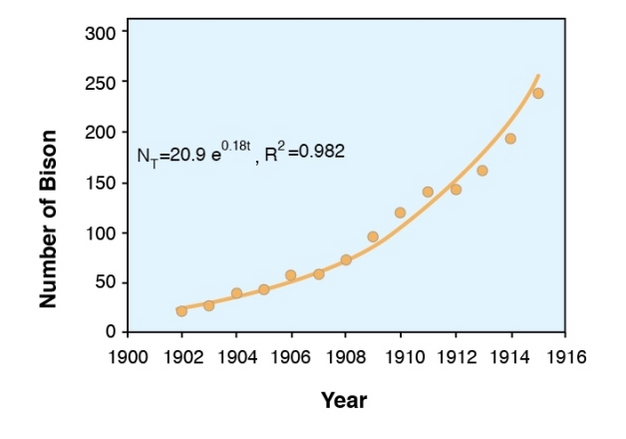
Figure 1: The American bison population in northern Yellowstone National Park grew exponentially between 1902 and 1915.
Later being driven nearly to extinction in the 1800s, the population began growing again due to conservation efforts implemented past governments and private landowners in the early 1900s.
© 2012 Nature Education Adapted from Figure 6.3 in Gates et al. 2010. All rights reserved. 
The yearly increment in the northern YNP bison population between 1902 and 1915 can be described as exponential growth. A population that grows exponentially adds increasingly more than individuals as the population size increases. The original adult bison mate and accept calves, those calves grow into adults who have calves, and and then on. This generates much faster growth than, say, calculation a abiding number of individuals to the population each year.
Exponential growth works by leveraging increases in population size, and does not require increases in population growth rates. The northern YNP bison herd grew at a relatively constant charge per unit of xviii% per twelvemonth between 1902 and 1915 (Gates et al. 2010). This meant that the herd simply added between 4 and ix individuals in the outset couple of years, simply added closer to l individuals by 1914 when the population was larger and more than individuals were reproducing. Speaking of reproduction, how often a species reproduces can touch how scientists draw population growth (see Effigy two to larn more).
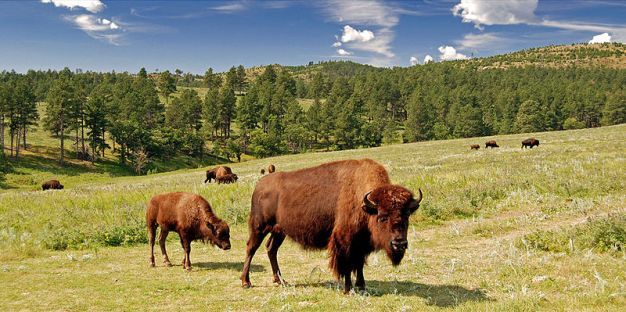
Figure two: Bison young are born one time a year — how does periodic reproduction impact how we describe population growth?
The female bison in the YNP herd all have calves around the same time each yr — in spring from April through the starting time of June (Jones et al. 2010) — so the population size does non increment gradually, but jumps upwardly at calving fourth dimension. This type of periodic reproduction is mutual in nature, and very different from animals like humans, who accept babies throughout the yr. When scientists want to describe the growth of populations that reproduce periodically, they use geometric growth. Geometric growth is similar to exponential growth because increases in the size of the population depend on the population size (more than individuals having more offspring means faster growth!), but under geometric growth timing is important: geometric growth depends on the number of individuals in the population at the start of each convenance season. Exponential growth and geometric growth are like enough that over longer periods of fourth dimension, exponential growth tin can accurately draw changes in populations that reproduce periodically (similar bison) as well as those that reproduce more constantly (like humans).
Photo courtesy of Guimir via Wikimedia Eatables.
The ability of exponential growth is worth a closer expect. If y'all started with a single bacterium that could double every hour, exponential growth would give you 281,474,977,000,000 bacteria in just 48 hours! The YNP bison population reached a maximum of 5000 animals in 2005 (Plumb et al. 2009), only if it had connected to grow exponentially equally it did between 1902 and 1915 (xviii% growth rate), there would exist over one.iii billion (ane,300,000,000) bison in the YNP herd today. That'south more than thirteen times larger than the largest population e'er thought to accept roamed the entire plains region!
The potential results may seem fantastic, but exponential growth appears regularly in nature. When organisms enter novel habitats and have abundant resources, as is the case for invading agricultural pests, introduced species, or during advisedly managed recoveries like the American bison, their populations often feel periods of exponential growth. In the case of introduced species or agricultural pests, exponential population growth can lead to dramatic environmental deposition and significant expenditures to control pest species (Figure 3).
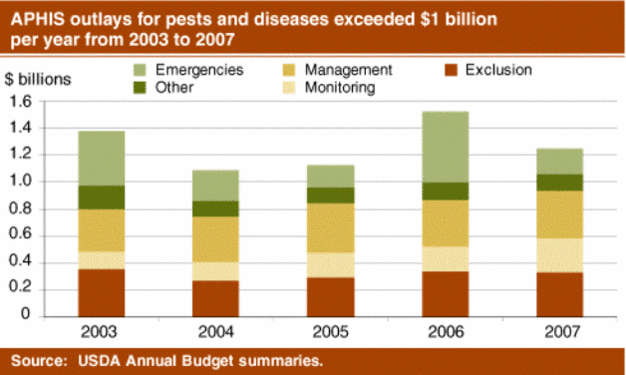
Figure three: If this much money is being spent on something, it must be important!
Agreement population growth is important for predicting, managing, monitoring, and eradicating pest and disease outbreaks. Many introduced species, including agricultural pests and infectious diseases, abound exponentially as they invade new areas, and billions of dollars are spent predicting and managing the population growth and dispersal of species that have the potential to destroy crops, harm the wellness of humans, wild animals, and livestock, and impact native species and natural ecosystem functioning. APHIS is the Animal and Plant Health Inspection Service and is part of the United states Department of Agriculture.
© 2012 Nature Pedagogy From Livingston et al. 2008. All rights reserved.
After the Boom: Limits to Growing Out of Control
For every organism — whether plant, animal, virus, or bacterium — there is an platonic set of circumstances that would allow a population of that organism to grow, uninhibited, at the highest possible rate. Even if they temporarily accomplish maximal rates of uninhibited growth, populations in the natural globe somewhen fall brusk of this ideal. For example, the northern Yellowstone National Park bison herd did not grow to 1.iii billion...why not?
Let'south think about the conditions that allowed the bison population to grow betwixt 1902 and 1915. The total number of bison in the YNP herd could have changed considering of births, deaths, clearing and emigration (clearing is individuals coming in from outside the population, emigration is individuals leaving to become elsewhere). The population was isolated, so no immigration or emigration occurred, pregnant only births and deaths changed the size of the population. Because the population grew, there must have been more births than deaths, right? Right, but that is a unproblematic way of telling a more complicated story. Births exceeded deaths in the northern YNP bison herd between 1902 and 1915, allowing the population to grow, but other factors such every bit the age structure of the population, characteristics of the species such as lifespan and fecundity, and favorable environmental weather, determined how much and how fast.
Changes in the factors that once immune a population to grow tin can explicate why growth slows or even stops. Figure 4 shows periods of growth, besides as periods of decline, in the number of YNP bison between 1901 and 2008. Growth of the northern YNP bison herd has been limited past disease and predation, habitat loss and fragmentation, man intervention, and harsh winters (Gates et al. 2010, Plumb et al. 2009), resulting in a current population that typically falls between 2500 and 5000, well below the i.3 billion bison that continued exponential growth could have generated.
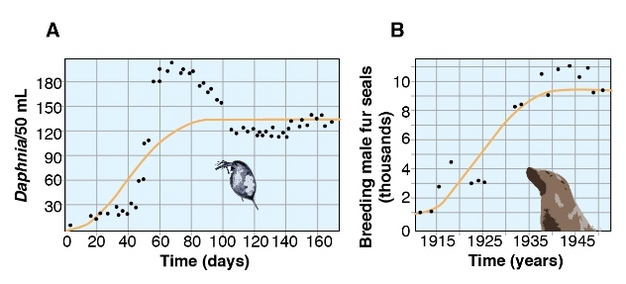
Figure iv: The YNP bison population has increased and decreased in size over the past century in response to factors such as disease, predation, habitat loss, human intervention, and environmental weather.
Scientists with the National Park Service and Colorado State University recently published these data showing both the number of bison counted in YNP on an almanac basis (blue dots) and the number of bison removed from the population (grey columns) for the purposes of herd direction. Management of the bison population in YNP has been fairly controversial — to larn more well-nigh this controversy check out Plumb et al. 2009.
© 2012 Nature Pedagogy From Plumb et al. 2009 All rights reserved.
Factors that enhance or limit population growth can exist divided into ii categories based on how each cistron is afflicted by the number of individuals occupying a given area — or the population'south density. As population size approaches the carrying capacity of the environment, the intensity of density-dependent factors increases. For example, competition for resources, predation, and rates of infection increase with population density and can eventually limit population size. Other factors, like pollution, seasonal weather extremes, and natural disasters — hurricanes, fires, droughts, floods, and volcanic eruptions — affect populations irrespective of their density, and can limit population growth but by severely reducing the number of individuals in the population.
The idea that uninhibited exponential growth would eventually be limited was formalized in 1838 by mathematician Pierre-Francois Verhulst. While studying how resources availability might impact homo population growth, Verhulst published an equation that limits exponential growth as the size of the population increases. Verhulst'south equation is ordinarily referred to as the logistic equation, and was rediscovered and popularized in 1920 when Pearl and Reed used it to predict population growth in the Usa. Effigy 5 illustrates logistic growth: the population grows exponentially under certain conditions, as the northern YNP bison herd did between 1902 and 1915, merely is limited every bit the population increases toward the conveying capacity of its environment. Bank check out the commodity past J. Vandermeer (2010) for a more detailed explanation of the equations that draw exponential and logistic growth.
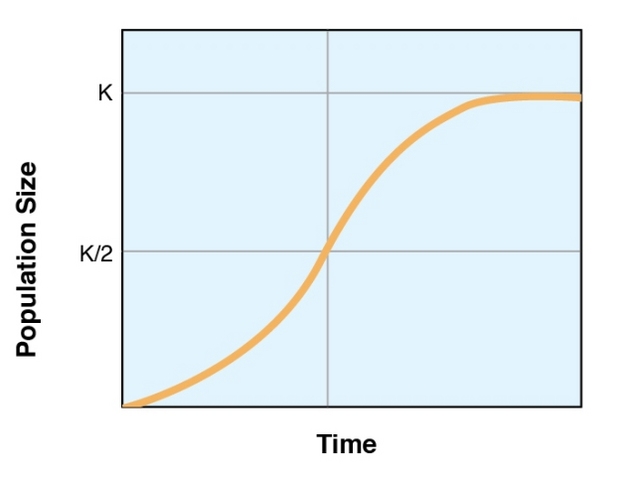
Effigy v: This curve describes logistic growth.
The population size grows exponentially for a while (similar the bison in Effigy i), simply then information technology slows down and levels off when as it approaches the conveying capacity (K).
Logistic growth is commonly observed in nature equally well as in the laboratory (Figure six), just ecologists have observed that the size of many populations fluctuates over time rather than remaining constant as logistic growth predicts. Fluctuating populations generally exhibit a period of population growth followed a period of population reject, followed by another flow of population growth, followed past...you get the picture.
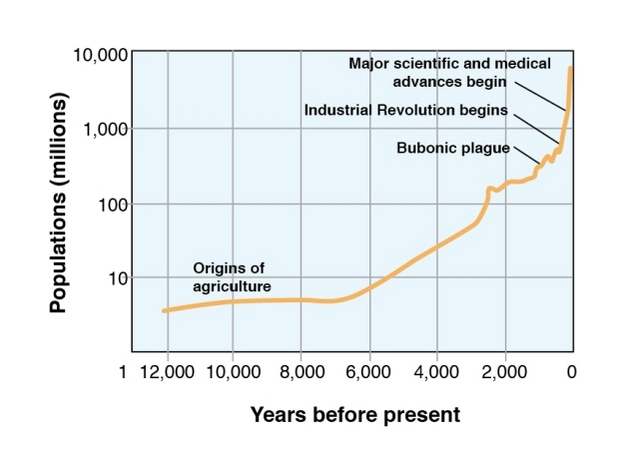
Figure six: Logistic growth curves as seen in real populations.
Populations growing according to logistic growth are observed in laboratory populations (Paramecium and Daphnia) besides equally in nature (fur seals). In the Daphnia example, it appears that the population size grew to more than than 180 individuals and then declined, leveling off at effectually 130–150 individuals. What factors might have acquired this design?
Populations can fluctuate because of seasonal or other regular environmental cycles (e.g., daily, lunar cycles), and volition also sometimes fluctuate in response to density-dependent population growth factors. For example, Elton (1924) observed that snowshoe hare and lynx populations in Canadian boreal forests fluctuated over time in a fairly regular cycle (Figure 7). More than importantly, they fluctuated, one after the other, in a predictable way: when the snowshoe hare population increased, the lynx population tended to rise (plentiful food for the lynx!); when the lynx population increased, the snowshoe hare population tended to fall (lots of predation on the hare!); when the snowshoe hare...(and the cycle continues).

Figure 7: Typically populations don't just reach a carrying capacity and stay at that place—instead, they fluctuate.
Many populations, over fourth dimension, exhibit periods of growth and decline. Circadian changes in population growth tin be caused by seasonal, or other environmental changes, or tin can be driven by density-dependent processes, such equally predation, like the snowshoe hare and lynx instance depicted here.
It is too possible for populations to decline to extinction if changing weather crusade death rates to exceed nascence rates past a large enough margin or for a long enough period of fourth dimension. Native species are currently failing at unprecedented rates — i important reason why scientists report population ecology. On the other manus, every bit seen in the YNP bison population, if new habitats or resources are made available, a population that has been declining or relatively stable over a long menstruation of time tin experience a new stage of rapid, long-term growth.
What about Human being Population Growth?
One of the most challenging applications of population growth research is to predict human population growth. The human population surpassed six billion people in 1999, and is expected achieve nine billion before 2050. Information technology is somewhat surprising to realize that it took all of human history for the human population to reach i billion people — which happened around 1800 — then a fiddling over 100 years to double to two million, and just twoscore years to double from three to six billion! The recent explosive (think exponential!) growth has been facilitated past advances in agriculture, science, and medicine, which have enabled more people to survive and accept longer lifespans (Effigy 8).

Figure 8: Does it surprise you that man population size is growing exponentially?
This graph shows the explosion of man population over the last 10,000 years along with some relevant historical events. Recall well-nigh the means that each of these events might have affected nascency and expiry rates of the man population. Annotation that the x-axis represents years earlier the present (i.eastward., 0=present 24-hour interval).
The growth of the global man population shown in Figure 8 appears exponential, just viewing population growth in different geographic regions shows that the human population is non growing the aforementioned everywhere. Some countries, particularly those in the developing globe, are growing rapidly, but in other countries the human population is growing very slowly, or even contracting (Figure 9). Studying the characteristics of populations experiencing different rates of growth helps provide scientists and demographers with insight into the factors important for predicting future human population growth, but it is a complicated task: in addition to the density dependent and independent factors we discussed for the northern Yellowstone National Park bison and other organisms, human population growth is affected past cultural, economic, and social factors that determine not only how the population grows, but too the potential conveying chapters of the Earth.

Figure 9: Global population growth is growing exponentially
Based on data from the US Census Bureau's International Database, this figure shows human population growth in Kenya and Japan from 1950–2025 (projected). Man populations in Republic of kenya are growing exponentially, but human populations in Japan have slowed, and may even be declining. What pattern practice you expect for human population growth in the United States? In China? Get to http://www.census.gov/ipc/world wide web/idb/ to go the data for any land that interests yous, and make your own graph similar the one above.
The idea that the human population might experience limits to growth was posed in 1798 in Thomas Malthus'south "An Essay on the Principle of Population Growth" and has generated debate for over 200 years. Today, questions virtually the limits to human population growth remain unanswered. Will the same factors that have already begun to limit growth in the world'south more than developed countries — declining nascence rates, for instance — ho-hum global human population growth? Or will growth proceed on an exponential path? If rapid growth continues, will the human population eventually approach the conveying chapters of the Earth, and be express by increased disease and contest for resources? Scientists continue to study the processes of population growth and census to gain insights into these of import questions.
Source: https://www.nature.com/scitable/knowledge/library/an-introduction-to-population-growth-84225544/
0 Response to "what conditions are necessary for a population to have exponential growth"
Enviar um comentário